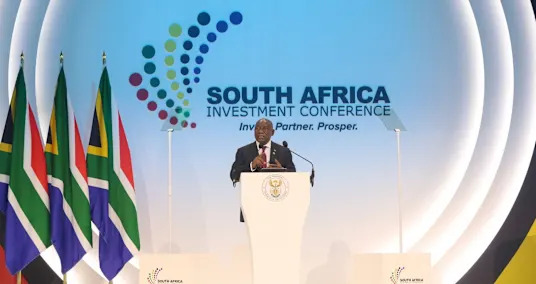
South African President Cyril Ramaphosa launched a nearly $200 billion investment drive aimed at accelerating economic recovery and industrialization in the face of growing worry over the impact of the Iran war on the continent’s biggest economy.
For more than a decade, South Africa’s economy has barely grown, leaving it with crumbling infrastructure and the need to create jobs in a country where one in three people are unemployed. Ramaphosa’s pitch to investors in Johannesburg this week was that South Africa has fixed the worst bottlenecks: He said the country is opening key sectors to private capital and is ready for large scale investments.
Ramaphosa said the effort will run through 2030 with delegates at the South African Investment Conference pledging $53 billion across 31 projects spanning energy, logistics, manufacturing, and digital infrastructure. They include Coca-Cola’s $1 billion expansion plan, and a $3.6 billion commitment from Sasol — the world’s biggest maker of fuel from coal — to upgrade operations.
LATEST POSTS
- 1
 Scientists solve the mystery of the prehistoric 'Burtele Foot'
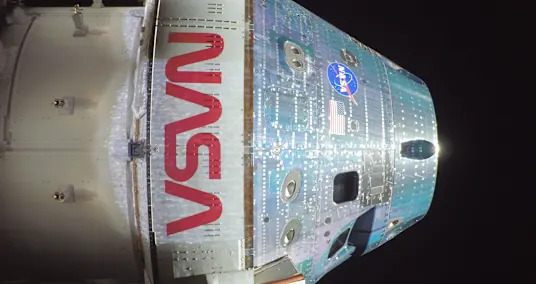
 - 2Artemis II live updates: NASA's historic moon mission set to make lunar flyby today
- 3Discovering a true sense of harmony: Contemplation and Care Practices
- 4Video Conferencing Instruments for Virtual Gatherings
- 5Travels to Dream Objections in Europe



- Web designers for Independent ventures
- ISS astronaut evacuation shouldn't interfere with upcoming Artemis 2 moon mission, NASA chief says
- L.A.'s most famous midcentury home, the Stahl House, is on the market for the 1st time, at $11K per square foot: See inside
- Step by step instructions to Think about Disc Rates Across Various Banks
- Vagus nerve stimulation shows promise as a way to counter Alzheimer’s disease- and age-related memory loss
- South African army arrive in crime hotspots to help tackle gangs
- 'Here we go again': Businesses grapple with fuel costs
- Watch live as near-Earth asteroid Eros buzzes the Andromeda Galaxy on Nov. 30 (video)
- Fears of global aluminum shortages intensify