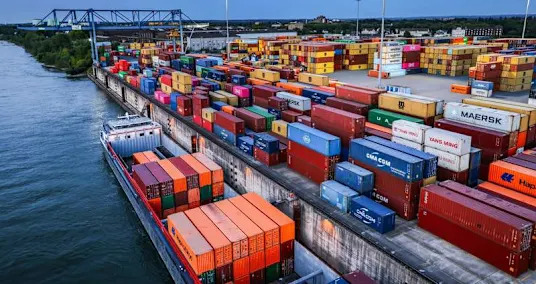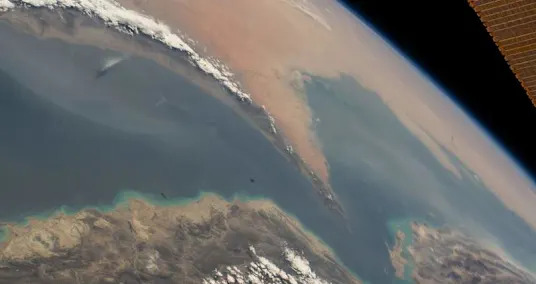
Iran has agreed to allow additional Pakistani-flagged vessels to pass through the Strait of Hormuz, Pakistan's foreign minister said on Saturday.
Foreign Minister Ishaq Dar said in a post on X that "the government of Iran has agreed to allow 20 more ships under the Pakistani flag to pass through the Strait of Hormuz."
"Two ships will cross the strait daily," he added.
Dar welcomed the decision as "a harbinger of peace" that "will help usher in stability in the region."
"Dialogue, diplomacy, and such confidence-building measures are the only way forward," the minister, who also serves as deputy prime minister, said.
Pakistan shares an around 900-kilometre-long border with Iran and has emerged as a mediator amid rising fears that the US-Israeli war with Iran could continue to spread to the wider region.
The announcement came hours ahead of a planned meeting of top diplomats from Saudi Arabia, Turkey and Egypt scheduled to take place in Islamabad on Sunday and Monday.
The foreign ministers of Egypt and Turkey arrived in the Pakistani capital on Saturday.
Meanwhile, Dar said he had held a telephone conversation with his Iranian counterpart, Abbas Araghchi, during which he emphasized the need for de-escalation, stressing that dialogue and diplomacy remain the only viable path to lasting peace.
"Pakistan remains committed to supporting all efforts aimed at restoring regional peace and stability," the minister said.
LATEST POSTS
- 1
 A somber Thor is returning for 'Avengers: Doomsday': Watch the dread-filled teaser
 - 2Figure out How to Analyze Medical attendant Compensation Patterns Across Different Specializations
- 35 Christmas movies to stream for less with this Paramount+ Black Friday deal
- 4Figurine of a woman and a goose offers peek at prehistoric beliefs
- 5Meet the Stars of the Feline World: Well known Pet Feline Varieties


- German state railway loss widens, passengers warned of trouble ahead
- Step by step instructions to Pick the Right Dental specialist for Your Dental Inserts Technique
- OECD: Iran war dampening global growth
- Several injured as man threatens attack on German high-speed train
- Can scientists detect life without knowing what it looks like? Research using machine learning offers a new way
- Asia's Noteworthy Destinations: A Voyager's Aide
- We tasted one of the 10,000 Hershey's Dubai chocolate bars being resold on eBay. Is it worth the hype?
- Giude to Best Web based Learning Stage
- San Francisco sues 10 companies that make ultraprocessed food